




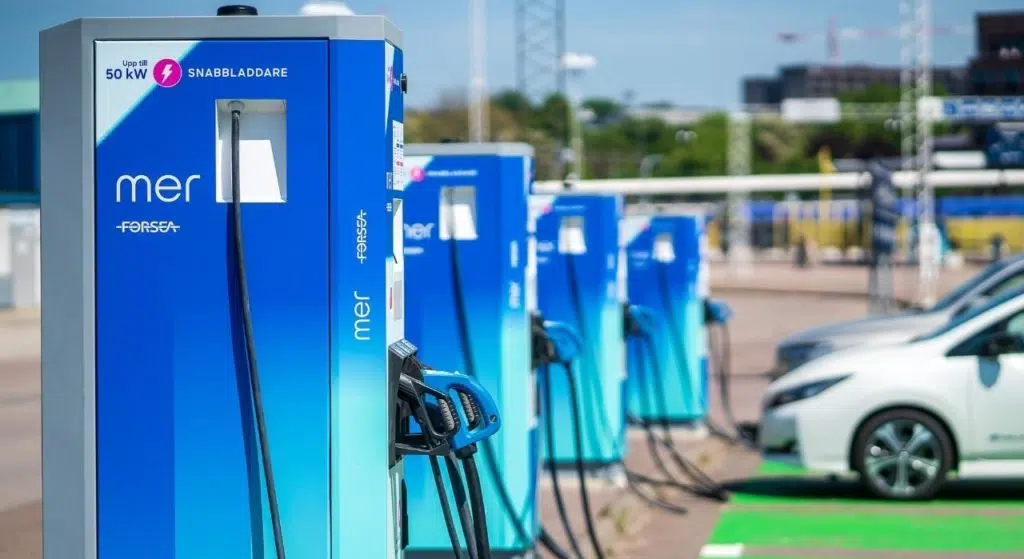
The European Commission has approved Sweden’s Climate Social Plan, making it the first national programme authorised under the new EU Climate Social Fund.
Backed by more than €500 million, the scheme is designed to cushion the social impact of the energy transition, with a clear focus on improving access to clean mobility for households most exposed to rising transport costs.
Funded largely through revenues from carbon pricing, the Climate Social Fund aims to ensure that the transition to low-emission energy and transport systems is fair and inclusive, particularly as the EU prepares to roll out the new emissions trading system for buildings and road transport (ETS2).
In Sweden’s case, the emphasis is firmly on the transport sector, reflecting national geography and mobility patterns.
Direct support for households facing mobility constraints
Sweden’s plan, set to begin next year and run until 2032, will mobilise €532.8 million to make electric vehicles more affordable for citizens with limited access to public transport. Of this total, €389.7 million will come from the EU Climate Social Fund, with the remainder financed by the Swedish state.
The scheme is expected to benefit around 115,500 households, offering monthly support of up to SEK 1,300 (approximately €120) for a maximum period of three years. The aid will apply to the purchase or leasing of new or used electric cars, lowering the entry barrier to zero-emission mobility for groups that would otherwise struggle to make the transition.
The programme targets households with low to lower-middle incomes living in 177 rural municipalities and 433 areas with limited public transport coverage.
These communities are among those most vulnerable to fuel price increases and mobility exclusion, particularly as carbon pricing expands under ETS2.
A transport-focused interpretation of the Climate Social Fund
Unlike broader climate strategies that spread funding across multiple sectors, Sweden’s Climate Social Plan is fully concentrated on transport.
The Commission noted that this approach reflects the country’s specific needs, where long travel distances and sparse public transport networks make private vehicles a necessity rather than a choice.
Following its assessment, the Commission concluded that the Swedish plan provides a sustainable response to the social impacts of the energy transition, while directly contributing to the uptake of clean transport solutions.
Once implementation begins, Sweden will be eligible to request its first disbursement in the first half of 2026.
Linking social policy with ETS2
The approval comes against the backdrop of the upcoming introduction of ETS2 in 2027, which will extend carbon pricing to fuels used in road transport and buildings.
The Climate Social Fund has been created precisely to address the distributional effects of this policy shift, ensuring that vulnerable households are not disproportionately affected by higher fossil fuel prices.
At EU level, the fund is expected to mobilise at least €86.7 billion between 2026 and 2032, combining ETS2 revenues with mandatory national co-financing of at least 25 per cent of each plan’s total cost.
Supported measures include energy efficiency improvements, building renovations, clean heating and cooling, and zero- and low-emission mobility.
Sweden sets an early benchmark
By securing early approval, Sweden positions itself as a reference case for other Member States still finalising their Climate Social Plans. To date, only four countries – Sweden, Latvia, Lithuania and Malta – have formally submitted plans, although more than half of EU countries have presented draft versions.
The Commission has recently issued updated guidance to help governments refine their proposals and accelerate implementation. Member States are being encouraged to move quickly, given the limited timeframe before ETS2 takes effect.
For Sweden, the climate social plan is closely linked to a forthcoming targeted EV premium, which the government aims to launch in January 2026. National authorities estimate that the available funding could support over 100,000 EV incentives between 2026 and 2032, reinforcing public acceptance of ambitious climate policy while accelerating transport electrification.
As Europe prepares for a new phase of carbon pricing, Sweden’s approach illustrates how social policy and clean mobility can be aligned, turning climate transition into an opportunity rather than a burden for vulnerable communities.
Discover Mobility Portal Data
Discover Mobility Portal Data, a new, exclusive market-intelligence platform offering reliable datasets and essential reports to support informed decision-making across the automotive sector—from combustion and electric vehicles to charging infrastructure.
Research, trend analysis and well-organised statistics, presented with clarity and precision, together with up-to-date insights—all just one click away. With Mobility Portal Data, better decisions are within reach.
READ MORE
-

chargecloud Expands Marketplace with AI-Based Support: Cooperation with Lemonflow Technologies
The integration brings 24/7 AI-powered user support, fully embedded into the chargecloud ecosystem, aiming to enhance operational efficiency and service quality for CPOs across Europe.
-

EV transition in Europe slows, but momentum remains after EU climbdown
EU policy flexibility may ease short-term pressure on automakers, yet rising EV sales, infrastructure needs and long-term investment signal that electrification remains the industry’s core trajectory.
-
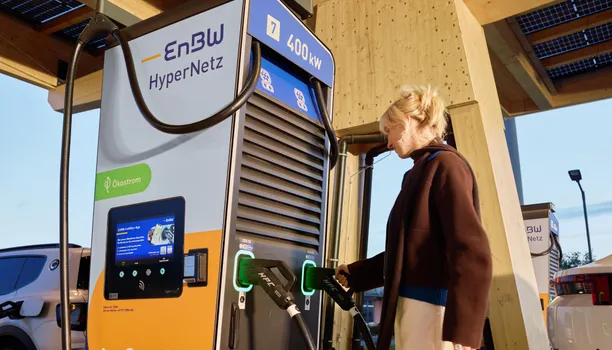
EnBW and Alpitronic strengthen long-term partnership to scale high-power charging across Germany
The agreement covers fast-charging hardware, joint development of future functionalities and a multi-year maintenance framework to support EnBW’s expanding HPC network.