



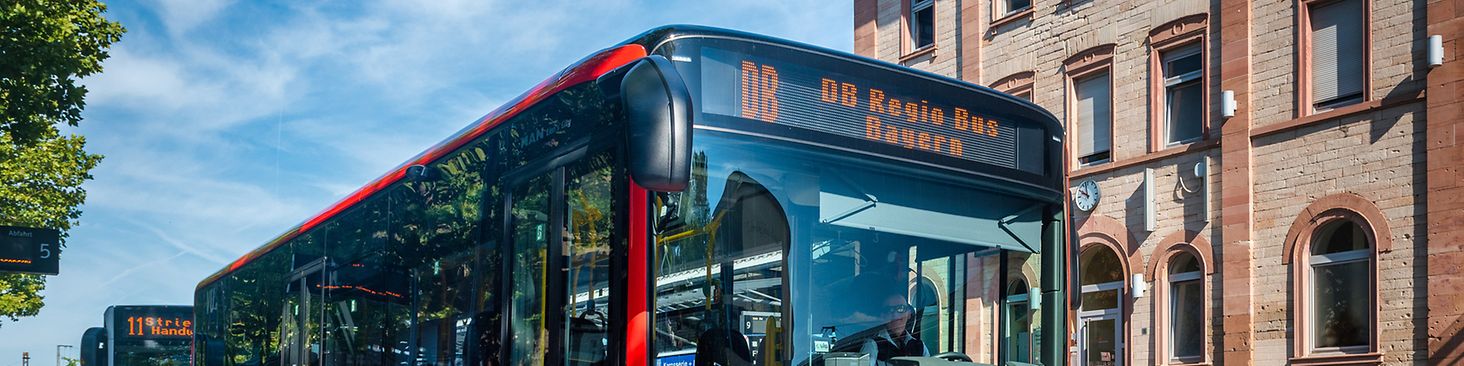
Deutsche Bahn (DB) has signed the largest bus procurement framework in the history of its regional transport arm, DB Regio, laying the groundwork for a major renewal and electrification of its bus fleet across Germany.
Through long-term framework agreements with multiple manufacturers, the group plans to acquire more than 3,000 new buses with electric or hybrid drivetrains over the coming years.
The contracts, awarded following a Europe-wide tender, are valued at over €1 billion and will run for six years. Deliveries are scheduled between 2027 and 2032, giving DB Regio a high degree of planning security as it modernises vehicles used in regional and local public transport nationwide.
MAN as core supplier, diversified sourcing strategy
The Munich-based manufacturer MAN Truck & Bus will remain DB Regio’s main partner, supplying around 95 per cent of the expected vehicles. These will include low-floor city buses and intercity models, available with hybrid and fully electric powertrains. A smaller share of the contract, accounting for around five per cent, has been awarded to BYD, which will supply electric intercity buses produced at its Hungarian facility.
In parallel, DB has concluded secondary framework agreements with IVECO, Scania, Daimler Buses and Zhongtong. This multi-supplier approach is designed to secure vehicle availability, mitigate supply-chain risks and provide flexibility should DB Regio win additional long-term transport concessions during the contract period.
According to DB, the framework allows for the procurement of approximately 3,300 solo and articulated buses, with a high level of configurational flexibility in terms of drivetrain, layout and equipment.
Electrification at scale, flexibility in transition
A central objective of the programme is the systematic expansion of battery-electric buses within DB Regio’s fleet. Fully electric vehicles will be complemented by fuel-efficient hybrid buses, in which an electric motor supports acceleration and recovers energy during braking.
The hybrid vehicles are designed to operate not only on conventional diesel but also on alternative fuels such as hydrotreated vegetable oil (HVO), while meeting the latest Euro 6e emissions standard. For the battery-electric buses, manufacturers have committed to ranges exceeding 300 kilometres without recharging throughout the vehicles’ service life, a key requirement for regional and intercity operations.
Long-term partnerships and industrial policy signals
Harmen van Zijderveld, DB Board Member for Regional Transport, described the framework agreements as a strategic instrument rather than a simple procurement exercise. The long-term nature of the contracts, he noted, enables DB Regio to continuously modernise its fleet and to work closely with manufacturers on further vehicle development.
The fact that the vast majority of buses will be supplied by a German manufacturer was also highlighted as a positive signal for Germany’s industrial base, at a time when public transport operators across Europe are reassessing supply chains and production footprints.
Passenger comfort and safety as standard
Beyond drivetrain technology, DB Regio has placed strong emphasis on passenger comfort and safety. All new buses will be equipped with USB charging ports at seats, energy-efficient LED interior lighting and specially upholstered seating for longer journeys. Full air conditioning will be standard across both solo and articulated buses.
Electric buses will use climate-neutral refrigerants and operate without fossil-fuel auxiliary heating systems. In terms of safety, the vehicles will feature LED headlights, turning assistants and reversing cameras, reflecting increasingly stringent requirements for urban and regional road safety.
Lifecycle costs and sustainability criteria
Economic efficiency over the entire vehicle lifecycle played a decisive role in the tender evaluation. DB assessed not only purchase prices but also energy consumption, maintenance requirements and overall quality criteria. Within the limits of public procurement law, the company also considered production locations, service network coverage and supplier resilience.
In addition, DB applied high standards related to environmental, economic and social responsibility, integrating corporate social responsibility (CSR) criteria into the selection process.
With 561 million passengers in 2024, DB Regio is Germany’s largest bus operator, carrying an average of 1.5 million passengers per day. The new framework contracts position the company to support this scale of operation with a fleet that is cleaner, more comfortable and increasingly electric, reinforcing the role of buses as a backbone of low-emission regional mobility.
Discover Mobility Portal Data
Discover Mobility Portal Data, a new, exclusive market-intelligence platform offering reliable datasets and essential reports to support informed decision-making across the automotive sector—from combustion and electric vehicles to charging infrastructure.
Research, trend analysis and well-organised statistics, presented with clarity and precision, together with up-to-date insights—all just one click away. With Mobility Portal Data, better decisions are within reach.
READ MORE
-
chargecloud Expands Marketplace with AI-Based Support: Cooperation with Lemonflow Technologies
The integration brings 24/7 AI-powered user support, fully embedded into the chargecloud ecosystem, aiming to enhance operational efficiency and service quality for CPOs across Europe.
-
EV transition in Europe slows, but momentum remains after EU climbdown
EU policy flexibility may ease short-term pressure on automakers, yet rising EV sales, infrastructure needs and long-term investment signal that electrification remains the industry’s core trajectory.
-
EnBW and Alpitronic strengthen long-term partnership to scale high-power charging across Germany
The agreement covers fast-charging hardware, joint development of future functionalities and a multi-year maintenance framework to support EnBW’s expanding HPC network.