





The European Parliament has voted in favour of prolonging the deadline that permits EU member states to fully exempt zero-emission trucks and buses from CO2-based road user charges.
The European Automobile Manufacturers’ Association (ACEA) welcomed the decision, describing it as a key measure to support the transition to climate-neutral road transport.
Currently, implementation of the Eurovignette Directive remains inconsistent across the bloc.
Only two member states have introduced full toll exemptions for zero-emission vehicles (ZEVs), while ten apply reduced rates. Fifteen member states have not yet made use of this policy tool.
According to ACEA, full exemptions are among the most effective measures to reduce the cost gap between ZEVs and conventional internal combustion vehicles.
“The clock is ticking fast. We have just 56 months left for a tenfold increase of the market share of zero-emission trucks – from today’s 3.5% to at least 35% by 2030,” states Thomas Fabian, Chief Commercial Vehicles Officer at ACEA.
He adds: “Europe has set the world’s most ambitious CO2 reduction targets for vehicle manufacturers, yet still largely fails to provide the necessary enabling conditions. It is incomprehensible that not all available policy instruments are being implemented to make this transition happen.”
ACEA is calling on member states to take immediate action following the formal adoption of the proposal by the European Council. It urges those that have not yet implemented CO2-based road charges to accelerate their plans.
Under the 2030 CO2 targets, manufacturers must reduce the average emissions of new trucks, interurban buses and coaches by 45%, requiring around 400,000 zero-emission heavy-duty vehicles to be in operation by that year.
READ MORE
-
Atlante y su “modelo híbrido”: generación, almacenamiento y recarga ultrarrápida para un sistema más resiliente
Atlante acelera su despliegue en España y en diálogo con Mobility portal, Inés Mackey, Chief of Staff de Atlante Iberia define las prioridades de la empresa y su apuesta por la interoperabilidad de la mano de Charge League.
-

Spain Auto 2030: a point-by-point look at the plan set to redefine the eMobility landscape
Spain has entered a new phase in its industrial strategy for electric mobility. The Government has unveiled Spain Auto 2030, a roadmap designed to mobilise €30 billion over the next five years, reshaping the centre of gravity of the electric vehicle market through fresh incentives, a centralised management model, targeted investment in charging infrastructure and…
-
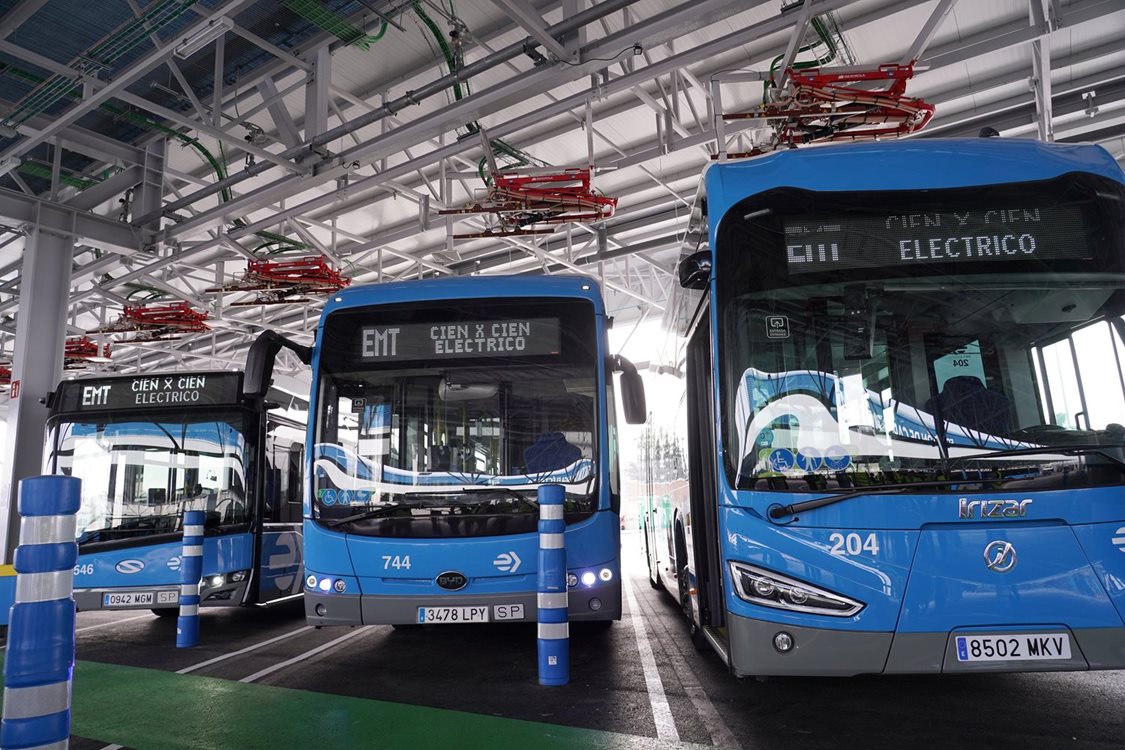
EMT Madrid licita 120 nuevos buses eléctricos: inversión de 79,35 millones y entregas entre 2026-2027
Con esta incorporación, Madrid refuerza su estrategia de descarbonización y consolida una de las flotas eléctricas urbanas más grandes de Europa.